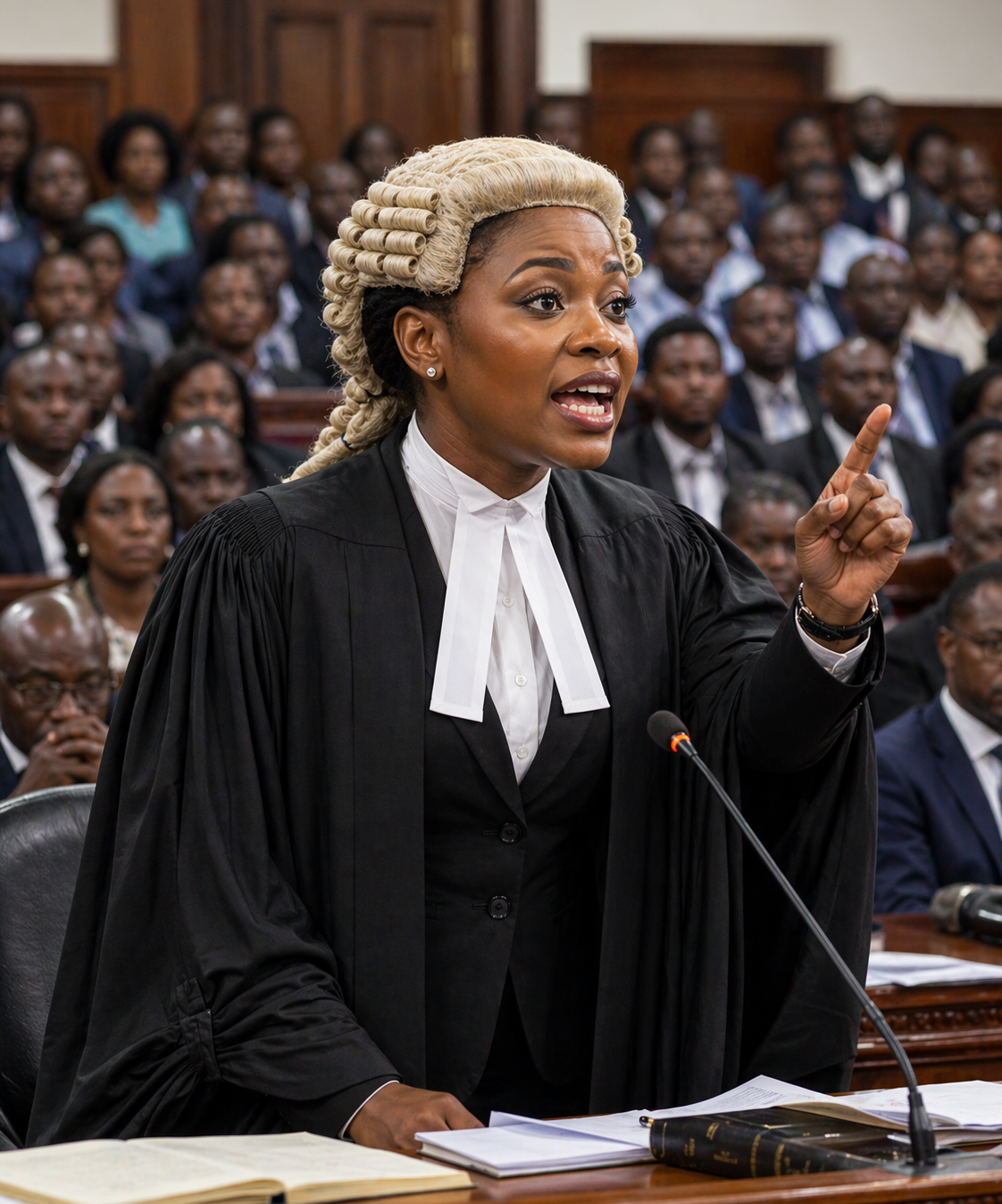
When a lawyer rises to address the court, the advocacy begins before the first word is spoken.
The way an advocate stands, moves, pauses and even uses his or her hands can influence how an argument is received. Good courtroom advocacy is, of course, built primarily on law, preparation, reasoning and persuasion. But effective non-verbal communication can reinforce those qualities.
Your hands are speaking in court. The question is whether they are helping your argument or competing with it.
Here are seven courtroom gestures advocates should understand.
1. The Open Palm
An open palm can communicate openness, confidence and composure. It is particularly useful when calmly explaining a position or walking the court through an argument.
The gesture should feel natural, not theatrical.
2. The Two-Finger Emphasis
When an argument has two central propositions, briefly using two fingers can help structure the submission.
“My Lords, there are two reasons why this application ought to be dismissed…”
The gesture visually reinforces the structure of the argument and helps the listener anticipate what follows.
3. The Precision Gesture
Bringing the thumb and index finger close together can be effective when narrowing an issue or emphasising a specific point.
“The issue before this Honourable Court is very specific.”
The smaller the legal issue, the more controlled the gesture should be.
4. The Single-Finger Emphasis
A raised finger can signal an important statutory provision, principle of law or piece of evidence.
But there is an important distinction: emphasis is not aggression.
Avoid pointing directly at the judge, witness or opposing counsel. The objective is to emphasise the argument, not intimidate the person listening to it.
5. The Open-Hand Direction
When taking the court to a particular document, exhibit or page, an open-hand movement is generally more professional than an abrupt pointing gesture.
“My Lords, may I respectfully draw the Court’s attention to page 14?”
The movement should be deliberate and brief.
6. The Controlled Two-Hand Gesture
Both hands can occasionally be used when making a significant submission or explaining a broader concept.
But restraint matters.
The courtroom is not a stage, and an advocate is not performing for an audience. Excessive hand movements can undermine the very authority the lawyer is trying to project.
7. Strategic Stillness
Perhaps the most powerful courtroom gesture is no gesture at all.
After making an important submission, stop.
Stand still. Pause. Let the argument land.
“That is the submission for the Applicant.”
Sometimes silence, following a carefully constructed argument, communicates more confidence than another movement ever could.
The Golden Rule
There is no magical hand gesture that will make a weak legal argument persuasive.
Substance comes first.
A lawyer who knows the law, understands the facts, anticipates the opponent’s arguments and presents the case clearly already possesses the foundation of persuasive advocacy.
Body language should simply reinforce that foundation.
The best advocates therefore do not merely speak with confidence. They look composed, move deliberately and know when to remain still.
In the courtroom, every movement should have a purpose.
Your hands should support your argument, not become the argument.
Be First to Comment