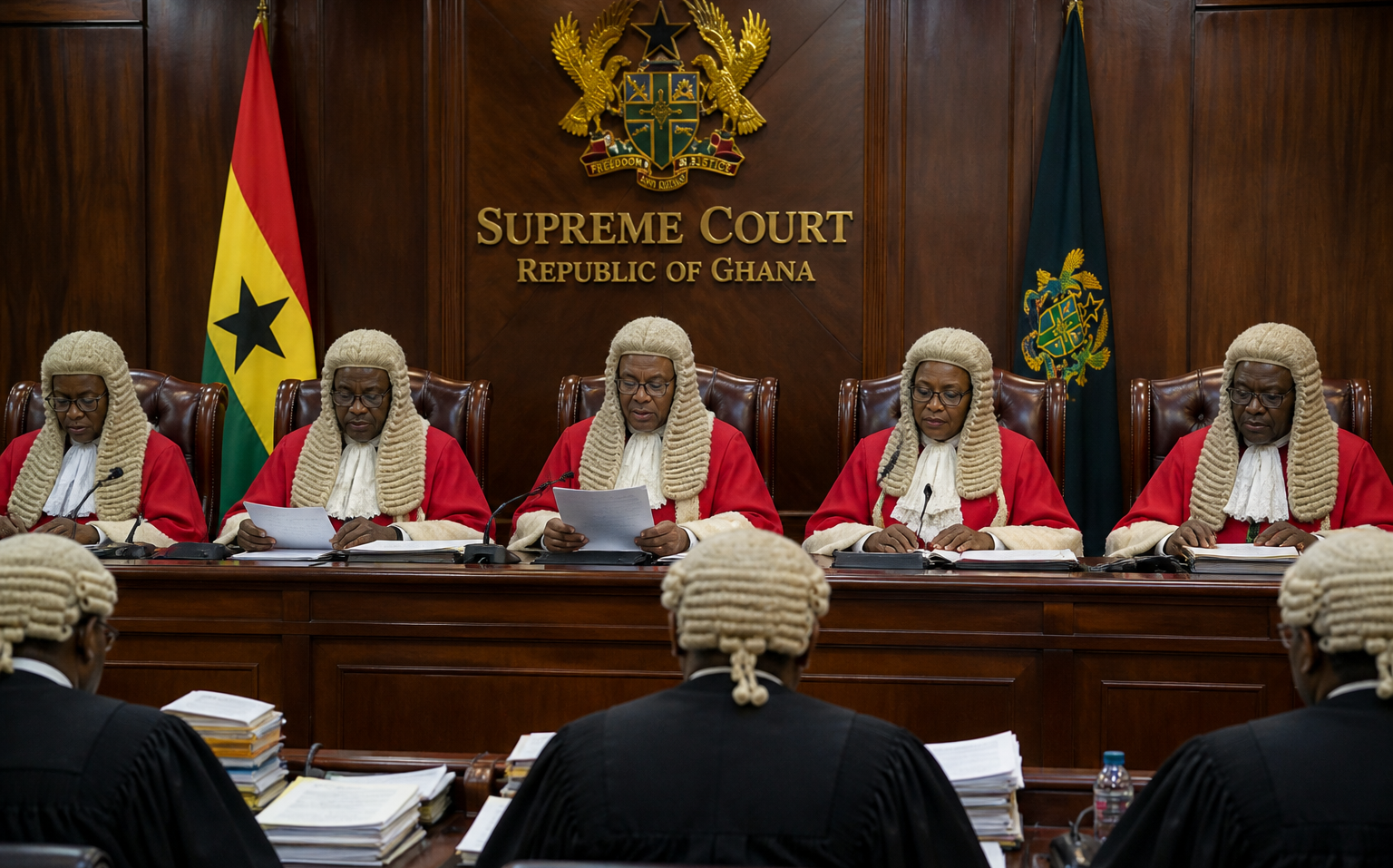
Citation: Writ No. J1/07/2022, decided 9 March 2022.
Facts of the case:
In this case, Parliament rejected the 2022 Budget after the Majority walked out over disagreements concerning the proposed E-Levy. When Parliament reconvened on 30 November, the First Deputy Speaker, Joseph Osei-Owusu, presided in the Speaker’s absence. He was counted among the 138 Members present, and Parliament subsequently approved the Budget. Justice Abdulai challenged the proceedings, arguing that the presiding Deputy Speaker should not have been counted towards the quorum.
Legal Issue:
The legal issue was whether a Deputy Speaker presiding over Parliament could be counted for the quorum under Article 104(1) and retain the right to vote.
To the Decision of the Court:
The Supreme Court held that a presiding Deputy Speaker remains an MP and can be counted for the Article 104(1) quorum and can vote. The Court also declared Parliament’s Standing Order 109(3), which purported to remove that right to vote, unconstitutional.
How do you apply this Principle?
The case establishes that Parliament’s Standing Orders cannot override the Constitution. Parliament may regulate its proceedings, but its rules must conform to the Constitution. It also confirms that the Supreme Court can review parliamentary conduct where a constitutional violation is alleged.
Be First to Comment