Citation: Civil Motion No. J5/80/2025 (decided on 22 July 2025)
Facts of the Case
In this case, the High Court presided over by Justice Eric Kyei Baffour, JA, sitting as an additional Justice of the High Court (Commercial Division) in Accra hearing the case of Republic v Eugene Baffoe-Bonnie & 4 Others, issued a warrant of arrest against Kevin Ekow Taylor on 16 January 2020. The warrant was issued after the Court was alerted to a social-media video which the judge considered scandalous and prima facie contemptuous, allegedly scandalising the judge, the court and the administration of justice.
The warrant directed that Taylor be apprehended so that the court could proceed against him for contempt. However, Taylor had not first been summoned to appear before the court or given an opportunity to answer the allegations against him.
Taylor subsequently invoked the Supreme Court’s supervisory jurisdiction under Article 132 of the 1992 Constitution and sought an order of certiorari to quash the warrant.
Legal Issues
The central issue was whether the High Court could issue a warrant for Taylor’s arrest for alleged contempt without first giving him an opportunity to be heard.
Decision of the Court
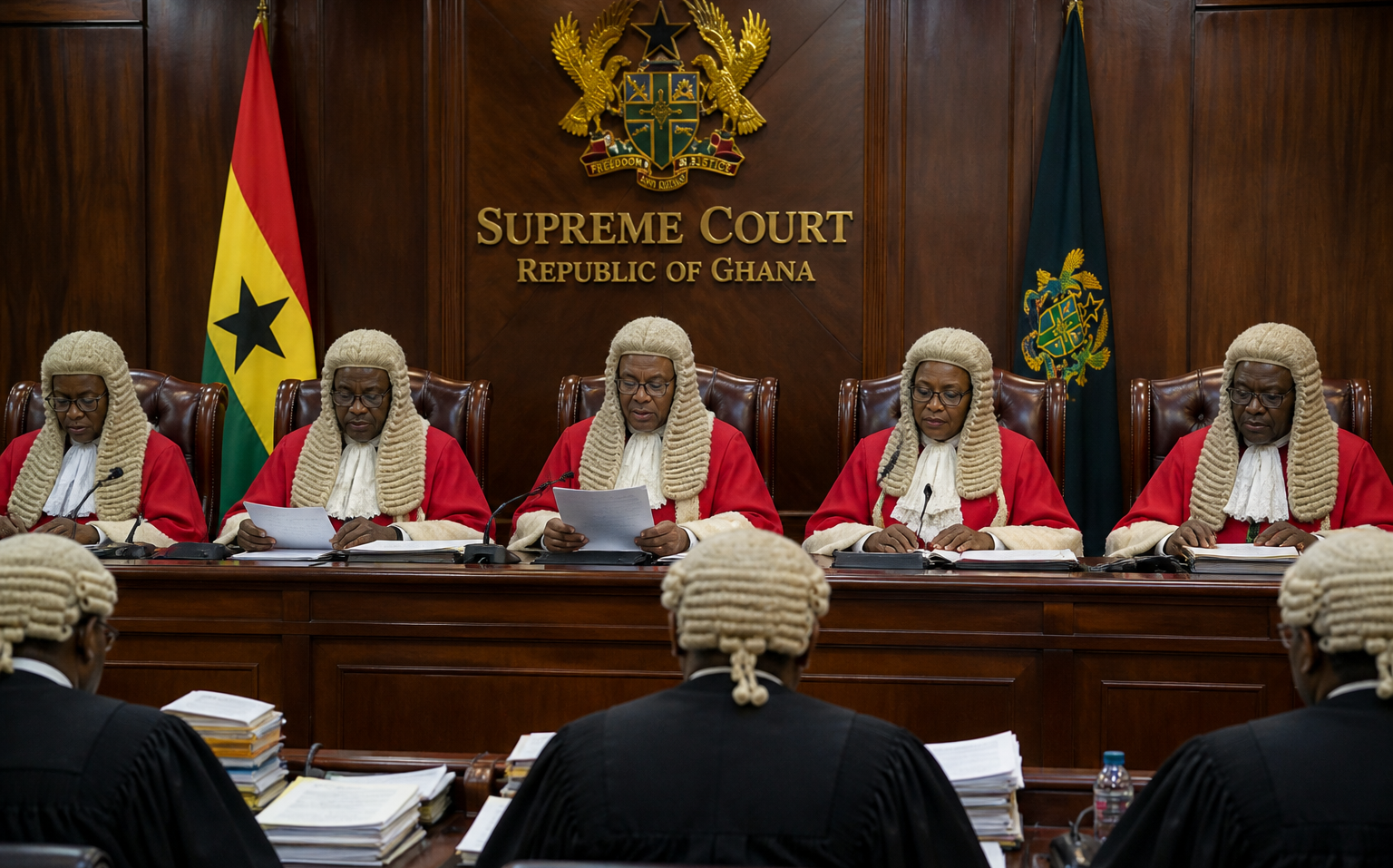
The Supreme Court, by a 4–1 majority, granted the application for certiorari and quashed the warrant of arrest. The majority held, in substance, that although courts possess powers to punish contempt in order to protect the administration of justice and the dignity of the courts, those powers must be exercised in accordance with due process.
The High Court’s procedure was fundamentally defective because Taylor was ordered to be apprehended before he had been given an opportunity to answer the allegations against him. The procedure therefore violated the principles of natural justice and constitutional due process.
The Supreme Court stressed that the question before it was not whether Taylor was actually in contempt of court. The issue was whether the High Court had followed the legally required procedure in issuing the warrant.
How do you apply this Principle?
The case establishes an important principle that a court’s power to punish contempt does not give it a licence to disregard due process and natural justice. Remember that the power to punish contempt is powerful, but it is not above the Constitution. Even when a court believes that its authority has been attacked, it must remain within the boundaries of jurisdiction, natural justice and due process.
Be First to Comment