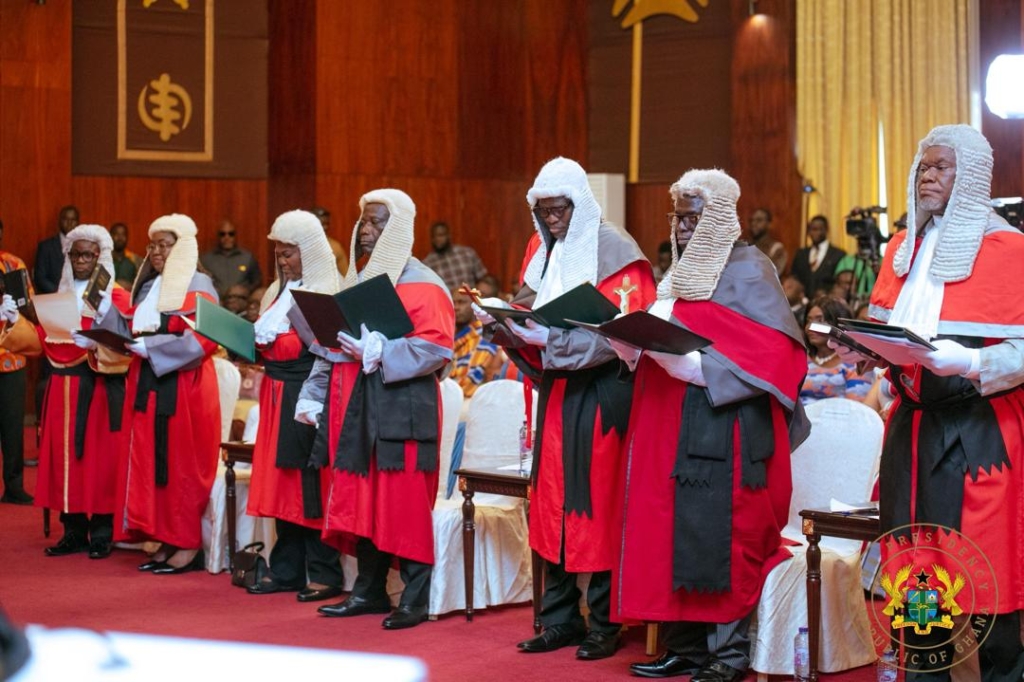
CITATION: [2015–2016] 1 SCGLR 171
Facts of the case:
In this case, Martin Kpebu, a private legal practitioner, brought an action challenging section 96(7) of the Criminal and Other Offences (Procedure) Act, 1960 (Act 30). The provision required courts to refuse bail for certain specified offences, including treason, murder, robbery, narcotics offences, rape and defilement.
Kpebu argued that the mandatory denial of bail for these offences was inconsistent with the constitutional protection of personal liberty and the presumption of innocence under the 1992 Constitution. His argument was essentially that a person accused of an offence should not be treated as though already convicted simply because of the offence charged.
Legal Issues:
The chief legal issues were:
- Whether section 96(7) of Act 30 was consistent with the 1992 Constitution.
- Whether the law could make certain offences automatically non-bailable.
- Whether a court retains discretion to grant bail even in serious criminal cases.
To the Decision of the Court:
The Supreme Court held that section 96(7) was unconstitutional and void to the extent that it made certain offences automatically non-bailable. The Court established the important principle that all criminal offences are bailable. However, this does not mean that bail must automatically be granted. The grant of bail remains a judicial discretion, which must be exercised according to law and judicially, not arbitrarily.
The Court therefore shifted the focus from “Is this offence bailable?” to “Should bail be granted in the circumstances of this particular case?”
How Do You Apply the Principle?
The case establishes that no offence is automatically non-bailable in Ghana. But “bailable” does not mean “entitled to bail.” The court still has discretion to grant or refuse bail based on the circumstances.
Be First to Comment