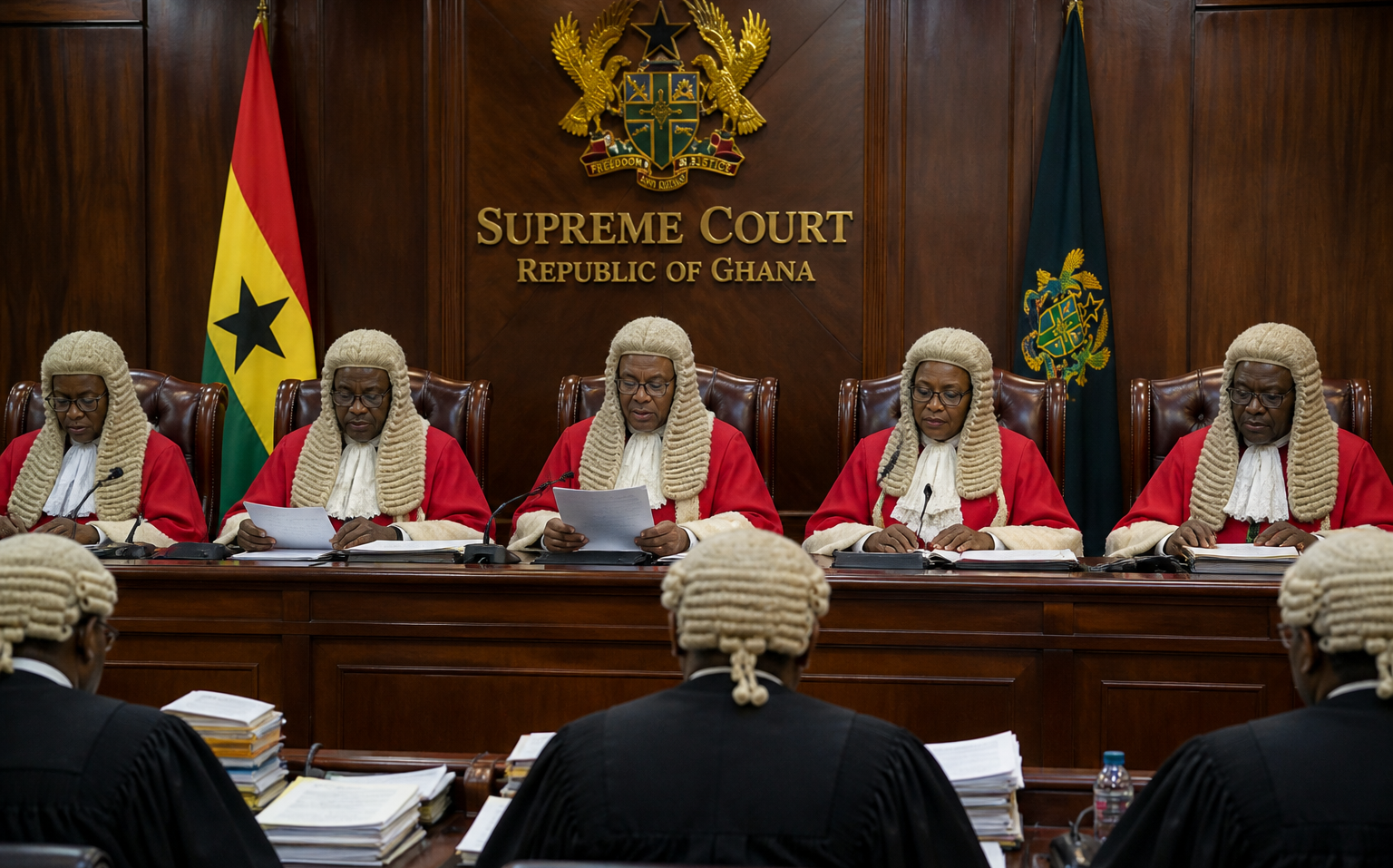
CITATION: [2018] GHASC 40; J1/06/2018, decided by the Supreme Court on 7 June 2018.
Facts of the Case:
In this case, Eugene Baffoe-Bonnie and four others were facing a number of criminal charges before the High Court in Accra. The charges included conspiracy, causing financial loss to the State, stealing, using public office for profit and other related offences arising from an alleged financial transaction involving approximately US$4 million. The accused persons pleaded not guilty.
Before the prosecution began calling its witnesses, counsel for the accused persons requested pre-trial disclosure of documents and other materials in the possession of the prosecution. The defence argued that such disclosure was necessary to enable the accused persons to adequately prepare their defence.
The dispute eventually reached the Supreme Court through a constitutional reference under Article 130(2) of the 1992 Constitution. The Supreme Court was asked to interpret Article 19(2)(e) and (g), which protect the rights of an accused person to a fair trial and to adequate time and facilities for the preparation of his or her defence.
Legal Issue:
The principal legal issue was:
Whether an accused person in a summary criminal trial is constitutionally entitled to full disclosure of documents and materials in the possession of the prosecution, including documents which the prosecution does not intend to tender as exhibits at the trial.
To the Decision of the Court:
The Supreme Court ruled in favour of the accused persons. The Court held that the constitutional right to a fair trial requires the prosecution to provide the accused with the necessary information and materials in its possession to enable the accused to properly prepare his or her defence.
The Court recognised that the disclosure obligation was not limited only to documents that the prosecution intended to rely upon or tender in evidence. The accused was entitled to access relevant materials in the prosecution’s possession, including materials that might assist the defence.
How Do You Apply This Principle?
This case emphasises that criminal trial must be conducted fairly, and an accused person must be given adequate facilities and information necessary to prepare a meaningful defence.
Be First to Comment