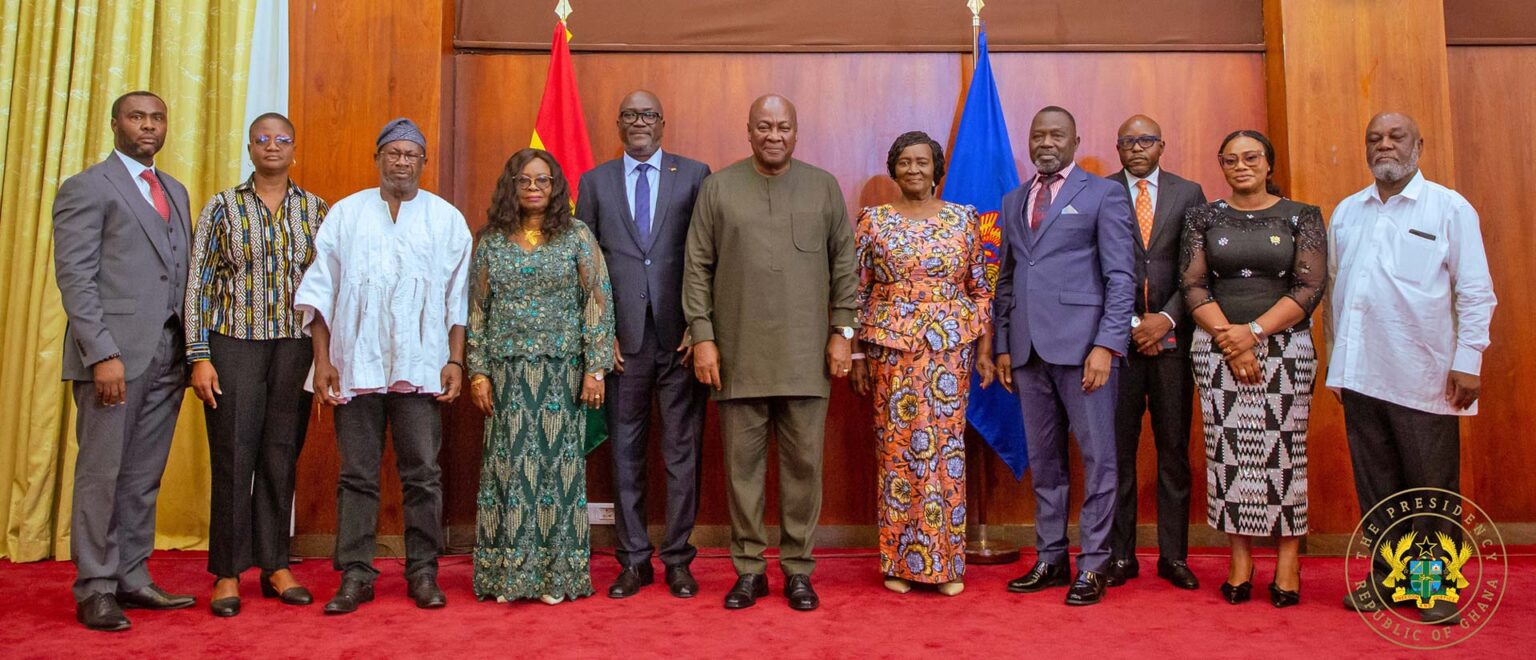
Professor H. Kwesi Prempeh and the Constitutional Review Committee deserve commendation for the diligence and urgency with which they discharged their mandate. The nationwide consultations, public engagements, and stakeholder interactions demonstrated a commendable commitment to participatory constitutionalism. The 1992 Constitution has been in force for over three decades, and periodic review is both legitimate and necessary in a maturing constitutional democracy.
That said, the proposal to extend Ghana’s presidential term of office from four to five years raises serious constitutional, political, and governance concerns that warrant rigorous scrutiny.
Under Article 66(1) of the 1992 Constitution, the presidential term of office is entrenched. Any amendment to this provision must comply strictly with the procedure outlined in Article 290, involving parliamentary approval by supermajority and ratification through a national referendum. While the Constitutional Review Committee may recommend such an amendment, the ultimate decision lies with the Ghanaian people. This procedural safeguard underscores the gravity of the proposal.
The principal justification advanced for extending the term is that four years is allegedly insufficient for a government to design, implement, and consolidate meaningful development programmes. At face value, this argument appears plausible. Upon closer examination, however, it is fundamentally flawed.
Since the inception of the Fourth Republic, all Presidents—except the late Professor John Evans Atta Mills—have served the constitutionally permitted two terms of eight years. President John Mahama, having returned to office in 2024, has not yet completed his final term. The more pertinent question, however, is not how long Presidents have stayed in office, but what measurable developmental outcomes have resulted from that tenure.
Despite eight-year mandates, successive administrations have struggled to deliver transformative development commensurate with Ghana’s vast natural resource endowment. Structural deficits persist in sanitation, urban planning, energy reliability, education, healthcare, and industrialisation. If eight years have not yielded the desired outcomes, it is intellectually disingenuous to assume that an additional year per term will suddenly cure systemic governance failures.
More troubling is the governance implication of such an extension. Increasing the presidential term from four to five years effectively delays electoral accountability. Elections are not mere rituals; they are the primary mechanism through which citizens assess performance, reward competence, and sanction failure. Extending the term without demonstrable improvement in governance standards risks normalising mediocrity and insulating underperforming administrations from timely public judgment.
In constitutional theory, time in office is not a substitute for capacity, vision, or discipline. A government that is serious, focused, and prepared can lay a strong developmental foundation within four years. Conversely, a government that lacks coherence, political will, or administrative efficiency will not perform better simply because it has been granted an additional year.
Ghanaian political folklore captures this reality succinctly: “Agoro beso a, efi anopa”—the quality of a game is evident from its opening moments. Performance is revealed early, not retroactively justified by extended tenure.
It is also worth noting that neither of Ghana’s dominant political parties—the National Democratic Congress (NDC) nor the New Patriotic Party (NPP)—has convincingly demonstrated superior governance outcomes either in government or in opposition. Chronic urban decay, inadequate infrastructure maintenance, persistent corruption concerns, and weak service delivery continue to plague the country. Accra, the national capital, remains one of the least planned and poorly lit major cities in the region after more than three decades of constitutional rule.
In this context, proposing to extend presidential tenure appears not as a reform for efficiency, but as a retreat from accountability. Constitutional reform must be driven by empirical performance and governance outcomes, not convenience or political comfort.
For these reasons, the proposal to increase the presidential term from four to five years is unsound in both principle and practice. Ghana should retain the four-year term as a safeguard against complacency and governance drift. If future administrations demonstrate exceptional performance, institutional discipline, and tangible national transformation, the debate may be revisited.
Until then, shortening the leash—not lengthening it—is the wiser constitutional choice. Ghanaians must exercise their sovereign power at the referendum stage to reject this proposal and reaffirm their commitment to accountability, performance, and democratic control.
Be First to Comment